Jellyfish at the Shore: How to Recognize Common Types and Respond Safely
Jellyfish appear on the shore in quiet ways: a pale disc half-buried in wet sand, a ribbon of tentacles caught around a reed, a clear bell pulsing in a rock pool. They are part of coastal life, not a sign that the sea has turned against us. Most encounters end with a photograph and a story. The trouble starts when curiosity meets bare hands, or when a swimmer steps into a bloom without looking. Knowing what you are seeing—and what to do if a sting happens—keeps the shoreline in perspective.
The Common Shore-Zone Jellyfish
On many temperate coasts, a handful of species do most of the shore-zone work. Their shapes vary, but the safe response is similar: give them room. A jellyfish is not a fish, and it is not a floating plastic bag. It is a simple animal with stinging cells, and even a damaged one can leave a painful reminder.
Moon jellies
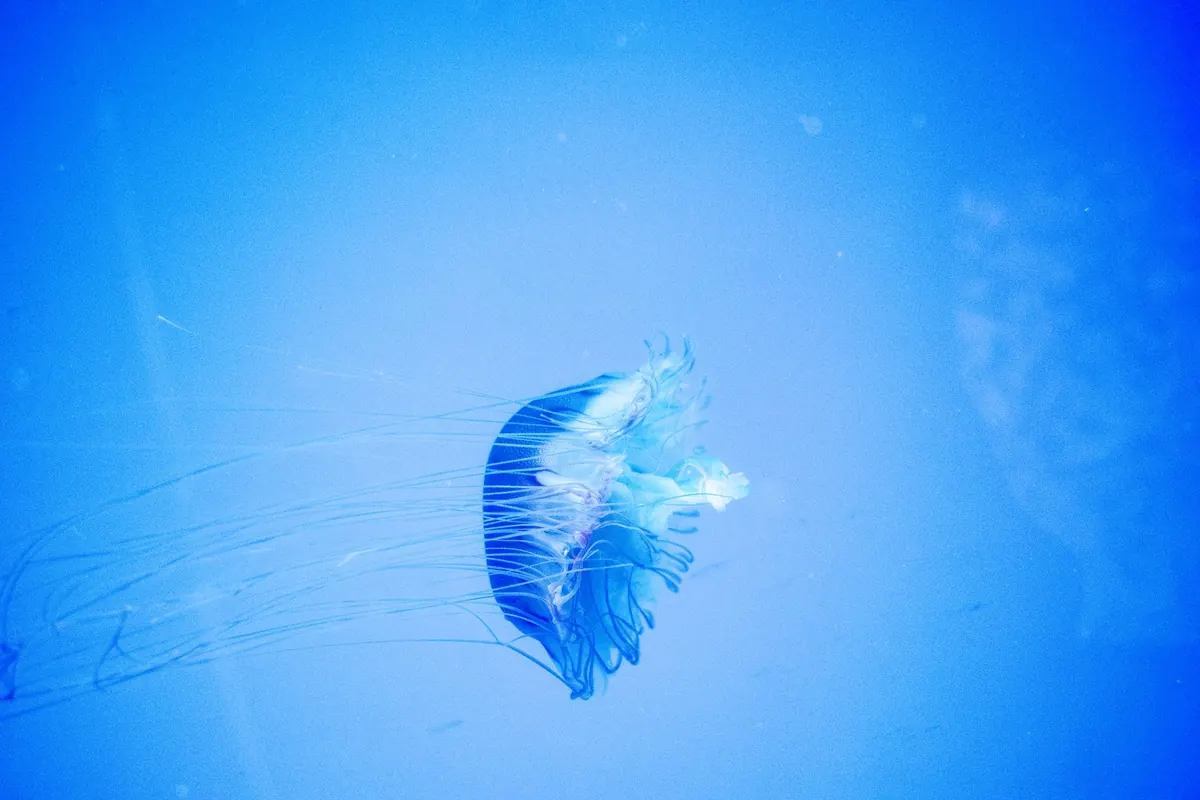
Moon jellies are the translucent, saucer-shaped jellies often washed up in groups. Look for four horseshoe-shaped rings inside the bell. Their sting is usually mild, but a stranded moon jelly can still trigger a reaction on sensitive skin.
Sea nettles
Sea nettles have a bell with long, trailing tentacles and a pattern of reddish-brown stripes or spots. They can sting more sharply than moon jellies, and their tentacles may be hard to see in choppy water.
Lion’s mane jellies
Lion’s mane jellies are larger, with a thick, reddish-brown bell and a dense mane of tentacles. They belong to colder water and can deliver a painful sting. A fragment on the sand deserves the same respect as a whole animal.
Cannonball jellies
Cannonball jellies look like firm, rounded domes, often with a slight blue or brown tint. They are common on some southern shores and usually carry a milder sting, but that is no reason to handle them.
Portuguese man o’ war
The Portuguese man o’ war is not a single jellyfish but a floating colony. Its blue, balloon-like float and long tentacles can cause severe pain. Treat it as a serious hazard, not a curiosity.
By-the-wind sailors and comb jellies
Small blue rafts and transparent, walnut-shaped comb jellies often strand together. Comb jellies do not sting, but they can be mistaken for jellyfish. If you are unsure, keep your hands back.
Keep a Respectful Distance
On the beach and in the water, distance is the simplest safety tool. A jellyfish is mostly water and delicate tissue; a bump from a knee or a dog’s nose can tear tentacles loose. Those fragments can still sting.
- Stay at least a few meters back from any jellyfish on the sand, and further from large ones with long tentacles.
- Keep children and dogs away. A stranded jellyfish is not a toy, and a dog that licks or noses one may need veterinary advice.
- Wear shoes on the tide line, especially after a storm or during a bloom.
- Look before you wade. Shuffle your feet in shallow water rather than taking big steps, and avoid swimming through visible ribbons or clusters.
- Never move a jellyfish with your hands, a stick, or a towel. If it is in a busy spot, tell a lifeguard or beach manager.
- Photograph from a distance and use zoom. You do not need a close-up to identify most common types.
If You Find One on the Sand
A stranded jellyfish can look dead and still sting. Tentacles dry into thin threads that are easy to miss. Do not kick it, pour fresh water on it, or try to bury it with your foot. Leave it where it is unless it is blocking a path or a lifeguard asks you to move it. If you want a photo, crouch low, keep your shadow off the animal, and keep your hands and phone well back. On a crowded beach, a simple word to a lifeguard is more useful than a dramatic rescue. And if a child has already picked one up, rinse the skin with seawater, remove any visible tentacles with tweezers or a gloved hand, and watch for symptoms.
If a Sting Happens: Basic Response Steps
Most jellyfish stings are painful but not dangerous. A few cause severe reactions, and some people are more sensitive than others. Act calmly and follow local lifeguard or medical guidance.
- Get out of the water. Move to shore or a safe place, away from the swarm.
- Call for help if the person has trouble breathing, chest pain, swelling of the face or throat, dizziness, or widespread pain. Those are emergency signs.
- Rinse with seawater, not fresh water. Fresh water can trigger more stinging cells to fire.
- Remove visible tentacles with tweezers or a gloved hand. Do not rub the area with sand, a towel, or a bare hand.
- Use hot water immersion for pain if local guidance says it is safe and the skin is not broken. Otherwise, a cool compress may soothe. Avoid urine, alcohol, and untested home remedies.
- Watch for worsening symptoms. If pain persists, the sting is large, or the person feels unwell, seek professional medical advice.
- For stings to the eyes, mouth, or face, get medical help promptly.
This is general shore-side guidance, not a substitute for a lifeguard, pharmacist, or doctor. When in doubt, ask for professional help.
Portuguese Man o’ War and Other Serious Stings
Bluebottles and Portuguese man o’ war deserve their own warning. Their tentacles can be several meters long and may wrap around a swimmer without the float being obvious. Do not try to remove a man o’ war with bare hands. Keep everyone back and alert a lifeguard. If a sting occurs, follow the same basic steps but seek medical advice early, especially for children or anyone stung around the face and neck. Some tropical species are far more dangerous; if you are travelling, ask local lifeguards what is in the water before you swim.
Shore-Friendly Habits That Prevent Trouble
A little preparation makes a day at the coast easier. Check local beach flags and lifeguard notices. Ask about recent blooms. Swim near other people and avoid murky water after storms. Carry a small first-aid kit with tweezers, and know where the nearest lifeguard station is. Teach children the difference between a shell and a jellyfish, and praise them for looking rather than touching. If you see a large bloom or a dangerous species, report it to the lifeguard or local wildlife authority. The sea is not a hazard to be feared; it is a place to pay attention. A jellyfish on the sand is a reminder that the coast belongs to more than us.
Photo: 江门 江 / Pexels

Why Local Fishermen Watch Wind and Tides: A Bay Story
In one Mediterranean bay, fishermen read wind, tide and the water's small signals before dawn — habits any...

How to Photograph Coastal Wildlife Without Disturbing It
Practical field craft, camera settings and distance rules for photographing coastal wildlife so the animal...
About Us