Shallow-Water Snorkeling for Beginners: 8 Common Mistakes to Avoid
Shallow-Water Snorkeling for Beginners: 8 Common Mistakes to Avoid
Shallow bay water looks forgiving. You can see the bottom, stand up if needed, and swim back to shore in minutes. That easy access is exactly why beginners make avoidable mistakes here. The same shallows that hold juvenile fish, seagrass, and curious crabs are also where a careless fin kick can cloud visibility or damage habitat. The eight mistakes below are the ones I see most often—and the fixes are simple enough to practice before your next entry.
The good news is that shallow-water snorkeling rewards small corrections. You do not need to be a strong swimmer or own expensive gear to enjoy it. You need a clear plan, a fitted mask, a relaxed kick, and the patience to let the bay come to you. Most problems in the shallows start before anyone gets wet: a rushed entry, a mask that leaks, or a plan that depends on everything staying exactly the same. Treat the first ten minutes as a check-in, not a race to the far side of the bay.
Mistake 1: Assuming shallow water is automatically easy
Depth in a bay changes with the tide, and a channel can sit a few metres from a sandbar that barely covers your ankles. Wind pushes water into corners; boat wakes arrive without warning. A spot that felt calm at noon can feel different an hour later. Before you put on a mask, check the tide, the wind forecast, and any local rules for the area. Pick a buddy, agree on a turn-around time, and choose an exit point you can actually see from the water.
If you feel a current pushing you sideways, do not fight it. Angle toward the shore, get out, and walk back along the beach. Shallow water is not the same as still water.
A quick pre-entry check takes less than five minutes and prevents most surprises:
- Tide: Is the water rising or falling, and will your exit still be easy in an hour?
- Wind: Is it blowing offshore, onshore, or across the bay? Wind can push you or chop the surface.
- Boat traffic: Are there channels, ramps, or tour boats nearby? Stay visible and out of marked lanes.
- Exit points: Pick two—one upwind and one downwind—so you are not committed to a single route.
- Buddy and timing: Agree on a hand signal for “turn back” and a time to be out of the water.
Shallow water also hides uneven footing. Seagrass, rocks, and soft mud can make standing up awkward, especially with fins on. If you need to stand, shuffle rather than step, and keep your mask on so you can see what is underfoot.
Mistakes 2 and 3: Stirring the bottom and crowding wildlife
The kick that clouds the bay
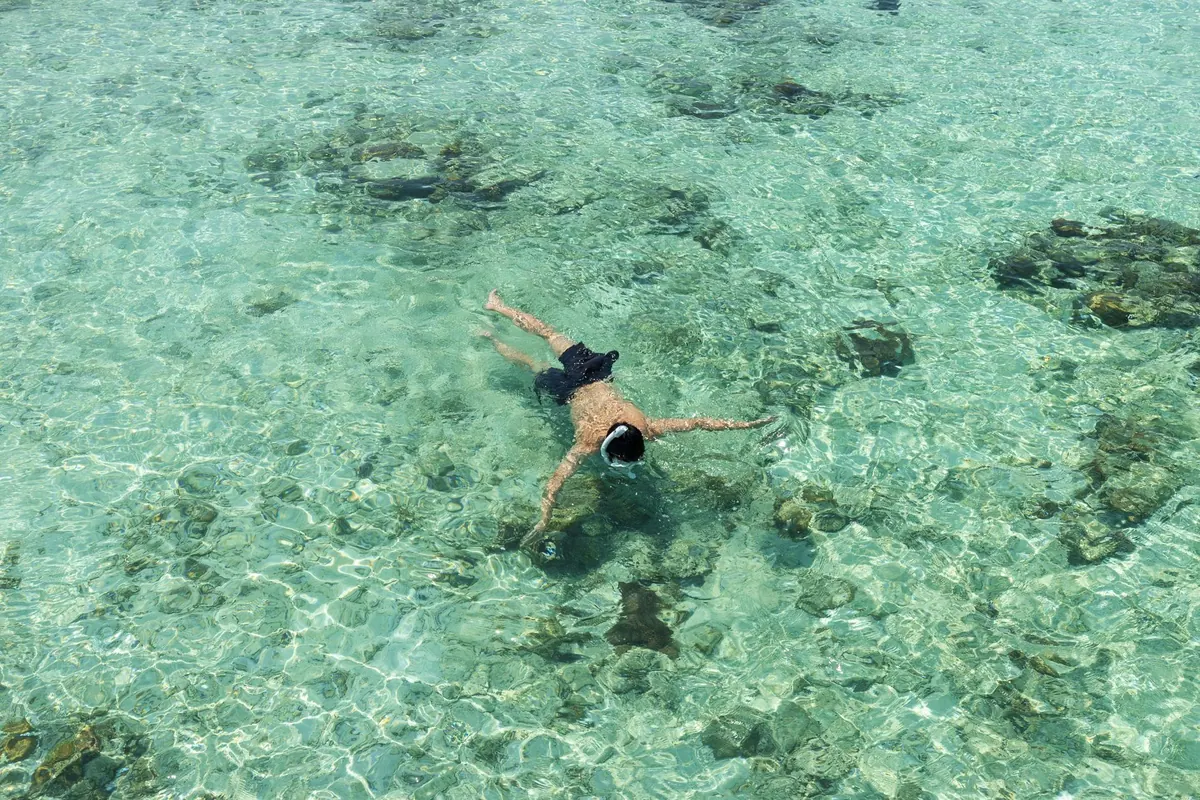
New snorkelers often pedal like they are on a bicycle. That motion drives fins downward, lifts sand, and turns clear water into soup. It also makes you work harder than you need to. Switch to a slow flutter kick from the hips, keep your fins just below the surface, and let your arms rest by your sides or fold them loosely under your chest if you need a little more stability. Think of your body as a long, quiet line. Small, steady kicks move you forward without churning the bottom.
In very shallow water, try a gentle frog kick or a slow scissor kick instead of a full flutter. If your fins touch sand or seagrass, you are too low. Lift your hips slightly, look ahead, and choose a route over sand rather than over fragile bottom. Clear water is not just nicer for you; it helps the next snorkeler and keeps small fish from hiding in a cloud of silt.
Giving wildlife room
Curiosity is natural, but crowding is not harmless. A snorkeler who chases a juvenile fish or reaches under a rock can separate an animal from cover, scare it into open water, or crush the tiny organisms living on the surface. Keep a respectful distance, move slowly, and never block an animal’s escape route. If a fish keeps turning back toward you, you are probably too close. Back off, float still for a moment, and let it decide where to go.
Do not stand on rocks, coral, or seagrass to rest. Even a quick push-off can damage growth that took years to form. Use sandy openings if you must stand, and keep your hands and fins away from the bottom. The best shallow-water encounters often happen when you stop kicking, breathe slowly, and let the bay settle around you.
Mistake 4: Skipping a buddy or a check-in plan
Shallow water can still be distracting. A snorkeler focused on a crab may drift into a channel, lose track of time, or forget how far the shore has become. A buddy does not need to be an expert; they need to know where you are and what to do if you signal for help. Stay within easy sight of each other, agree on hand signals before entry, and check in every few minutes.
If you are snorkeling with a group, decide who is watching the water and who is watching the time. “Meet back at the big rock at 11:30” is better than “see you later.” If you are alone, tell someone on shore where you are going and when you expect to return. That simple message is not overkill; it is the same courtesy you would want from a friend.
Mistake 5: Using gear that does not fit
A leaking mask ruins more snorkel trips than cold water or poor visibility. Test the seal before you get in: place the mask on your face without pulling the strap, inhale gently through your nose, and see if it stays put. If it slips or leaks, adjust the strap or try another mask. A loose snorkel can drag, and fins that are too large can cause cramps or force you into that bottom-stirring bicycle kick.
Keep your setup simple and secure:
- Mask: Comfortable seal, clear or low-volume lens, no hair caught under the skirt.
- Snorkel: Clip it to the mask strap so it stays upright and does not dangle.
- Fins: Snug but not tight; a gentle fit reduces cramps and gives better control.
- Exposure protection: A rash guard or thin wetsuit top helps with sun and chill.
- Visibility: A bright cap or float can help boats and buddies see you.
Do not overlook the small stuff. A mask that fogs constantly may need a proper rinse or a little anti-fog treatment. A snorkel with a damaged mouthpiece can leak or cause jaw fatigue. Check your gear on land, then test it in waist-deep water before you swim out.
Mistake 6: Holding your breath or hyperventilating
Snorkeling is not breath-hold diving, and shallow water is not a place to practice holding your breath until you feel dizzy. Breathe normally and steadily through the snorkel. If you want to look under a ledge, take a relaxed breath, duck down briefly, and return to the surface—do not force a long dive or compete with yourself. Hyperventilating before a dive can make you feel ready when your body is not, and it increases risk.
If you feel lightheaded, panicked, or short of breath, stop, roll onto your back, and breathe. Signal your buddy. There is no prize for pushing through discomfort in ankle-deep water. A calm snorkeler sees more, swims less, and makes better decisions.
Mistake 7: Forgetting sun, cold, and hydration
Shallow water reflects sunlight from below as well as above. Beginners often leave with a sunburned back, neck, and legs because they assumed the water would keep them cool. Wear a rash guard, use reef-safe sun protection where appropriate, and reapply on shore. Cold sneaks up too: even warm-looking bay water can pull heat from your body after 30 or 45 minutes. If you start shivering or your hands feel clumsy, get out and warm up.
Drink water before and after your snorkel. Dehydration can make you tired and foggy, and it is easy to ignore when your face is in the water. A simple routine helps: water on shore, a snack in the shade, and a dry towel waiting at your exit point.
Mistake 8: Pushing past your comfort zone
The most useful snorkeling skill in the shallows is knowing when to turn around. If the wind picks up, visibility drops, your mask keeps leaking, or you feel anxious, head for shore. A short snorkel that ends calmly is better than a long one that ends in a scramble. Set a turnaround time and stick to it, even if the fish are interesting.
If you remember one rule for shallow-water snorkeling, make it this: get out before you need to. The bay will still be there tomorrow.
Comfort also means choosing the right spot. A busy swimming beach with boat wakes and splashing children is not the same as a quiet, sheltered cove. Ask locals about currents, tide changes, and the best entry points. A five-minute conversation can save an hour of struggling against water that is doing something you did not expect.
A simple pre-entry checklist
- Check tide, wind, and boat traffic.
- Choose an entry and exit point you can see from the water.
- Agree on a buddy, a hand signal, and a turnaround time.
- Test your mask seal and secure your snorkel.
- Put on sun protection and drink water.
- Enter slowly, stand if needed, and take five calm breaths before swimming.
Practice these skills before you explore
You can practice everything important in waist-deep water. Float face down and breathe through the snorkel until it feels boring. Try slow flutter kicks while keeping your fins below the surface. Practice clearing a little water from your snorkel by exhaling firmly. Then practice standing up without using your hands on the bottom: bring your knees forward, plant your feet on sand, and stand while keeping your mask on. These small drills make the first real swim feel much less busy.
Shallow-water snorkeling is at its best when you move slowly, look closely, and leave the bay as clear as you found it. Avoid these eight mistakes, and the shallows become what they should be: a gentle place to learn, a nursery for marine life, and an easy escape from the shore.
Photo: ma hxin / Pexels

Why Local Fishermen Watch Wind and Tides: A Bay Story
In one Mediterranean bay, fishermen read wind, tide and the water's small signals before dawn — habits any...

How to Photograph Coastal Wildlife Without Disturbing It
Practical field craft, camera settings and distance rules for photographing coastal wildlife so the animal...
About Us